
As promise before, this is the articles about Malaysia's second largest natural lake. In English, ‘Tasik’ means lake. Tasik Chini is one of the only two natural lakes in Peninsula Malaysia, both of which are located in the state of Pahang. Located approximately 100km from Kuantan town, the capital of Pahang, Chini is a lake that was formed from the natural damming of a river valley. It is Malaysia's second largest natural lake and is made up of a series of 12 lakes. With its well-known myths, the lake has attracted many visitors from various destinations. Nevertheless, these legends have enticed numerous archeologists to conduct scientific expeditions in Chini.
Local legend tells a tale of a wandering group of Jakun tribesmen who cleared the land to grow food crops. During their labour, an old woman appeared who proclaimed that she was the rightful owner of the land and that her permission should have been sought before any trees were felled. The Jakun humbly apologised, whereupon the woman allowed the men to continue their work. Before departing, however, she planted her walking stick in the ground as a mark of her ownership, telling the men never to remove it.
The men continued with their work, but some time later they heard one of their dogs barking and snarling at a decaying log. One of the Jakun threw his stick at the log, but immediately a torrent of blood issued from the log causing the man to run back to his friends in fear. His friends thought he was possessed by demons and tried to keep away from him. However, the barking continued so the entire tribe returned to investigate the log. A spreading pool of blood had formed around the log.
In fear they hurled their own sticks at the sight, whereupon a dark cloud gathered in the sky. The thunder roared, the lightning flashed and a torrent of rain fell from the sky. The men grabbed their belongings and ran for cover, but in the chaos one of them pulled the old woman's stick from the ground - the very stick which they had been warned not to touch. Immediately a fountain of water poured from the hole made by the stick. The water flowed for many years, thereby creating the lake of Tasik Chini. The tribe realised then that the log was actually the dragon called Naga Seri Gumum.
Of course, no magical lake would be complete without stories of a resident monster or a long-lost, sunken city. So, Tasik Chini has both ! Much like the famous Loch Ness, a serpent-like monster is reputed to make the lake its home. More seriously, there are theories that an ancient Khmer city once existed in the vicinity which has prompted archaeological studies of the lake and its surrounds.
The Sacred Lotus
In reality, Tasik Chini is less a lake and more a naturally dammed tributary of the mighty Pahang River, which lies to the north. Until recently the lake's waters rose and fell with the seasons - during the rainy season the waters were unable to flow down the narrow Sungai Chini and so became backed up in a series of lakes. A unique ecosystem developed, dominated by the presence of the Sacred Lotus Nelumbo Nucifera which once covered the entire surface of the lake system.
Taken from http://www.ecologyasia.com
Sunday, September 03, 2006

Malaysia's Second Largest Natural Lake
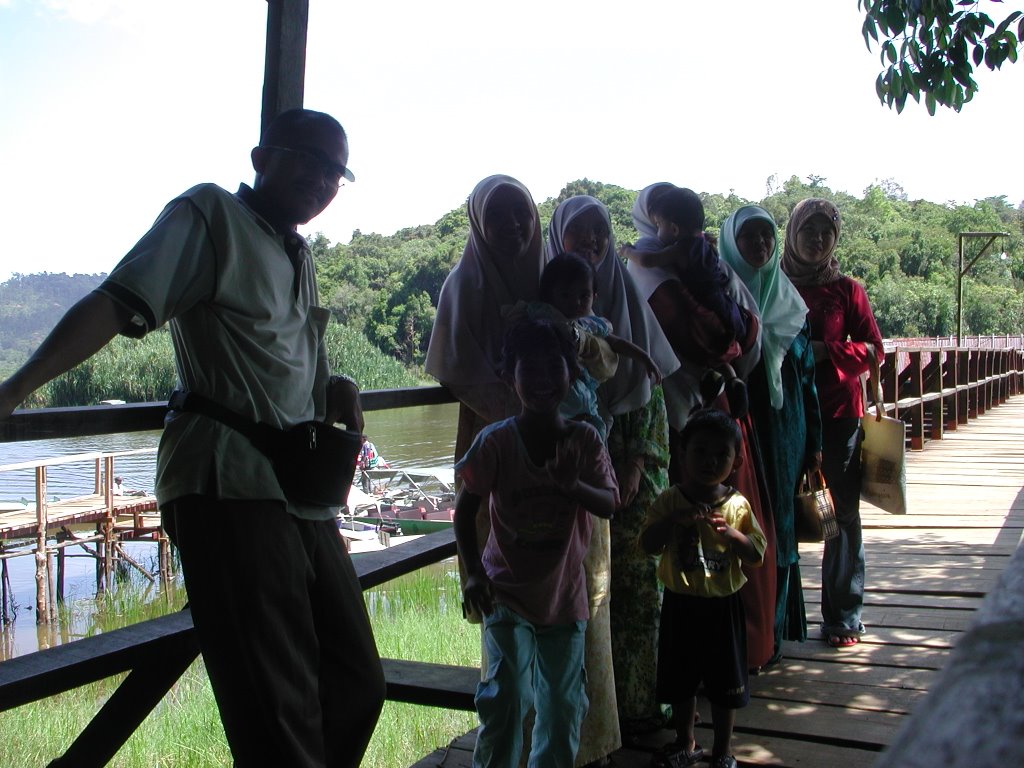
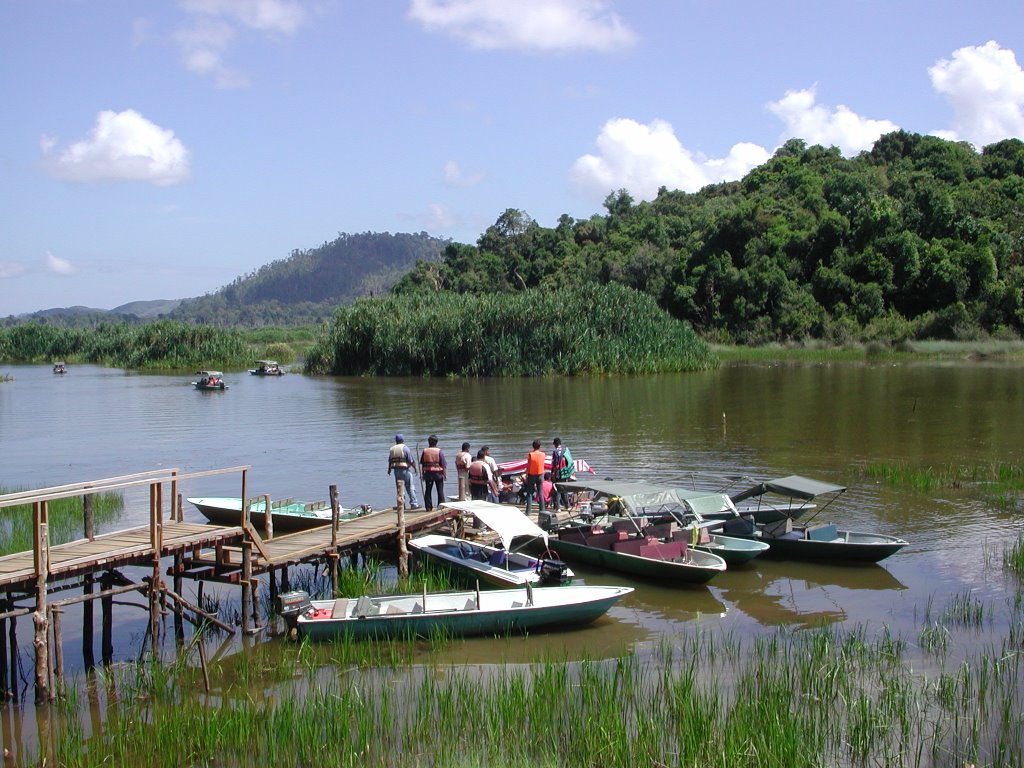
Last week, my family and I went to my sister’s house at Felda Chini. She’s just been transferred here from Sabah. Once there, the first thing got in my mind is Tasik Chini, Malaysia's second largest natural lake. Actually, I never been there although I’m from this state, Pahang. So, we decided to spend time there. We went there with our mother that also came from Temerloh with my brother and his wife. So, it’s more alike a family gathering. So, we’ve been there about 2 hours and feel the refreshment beside the lake. Here are some picture to share with.
To know more about Tasik Chini and the legend tells about it I’ll make it in my next post.
Friday, September 01, 2006
How Batu Pahat get its name?
As you can see beside I'm from Batu Pahat, one of the district in Johor, Malaysia.'Batu pahat' means chiselled stone. Batu Pahat takes it name from an incident when there is a well was said to have been dug by fleeing Siamese troops after a failed attack on Malacca during the reign of Sultan Mansur Syah, the third sultan of Malacca who ruled from 1446 to 1459. The Siamese Soldiers chiselled a hole in the rock until water flowed. The soldiers, who were being pursued by Malacca forces under Bendehara Tun Perak, fled south and sailed back to Siam(Thailand) via the South China Sea. So The district of Batu Pahat takes it name from the incident.
Thursday, August 31, 2006
Our trip to Tanjung Piai

Me, my wife and kid went there on my wife’s 26th birthday. Here are the slide describe our excitement been there. Hope you’ll be the next visitors.
Subscribe to:
Posts (Atom)
